
11 Strong Open Water Swimming Tips For Racing Faster
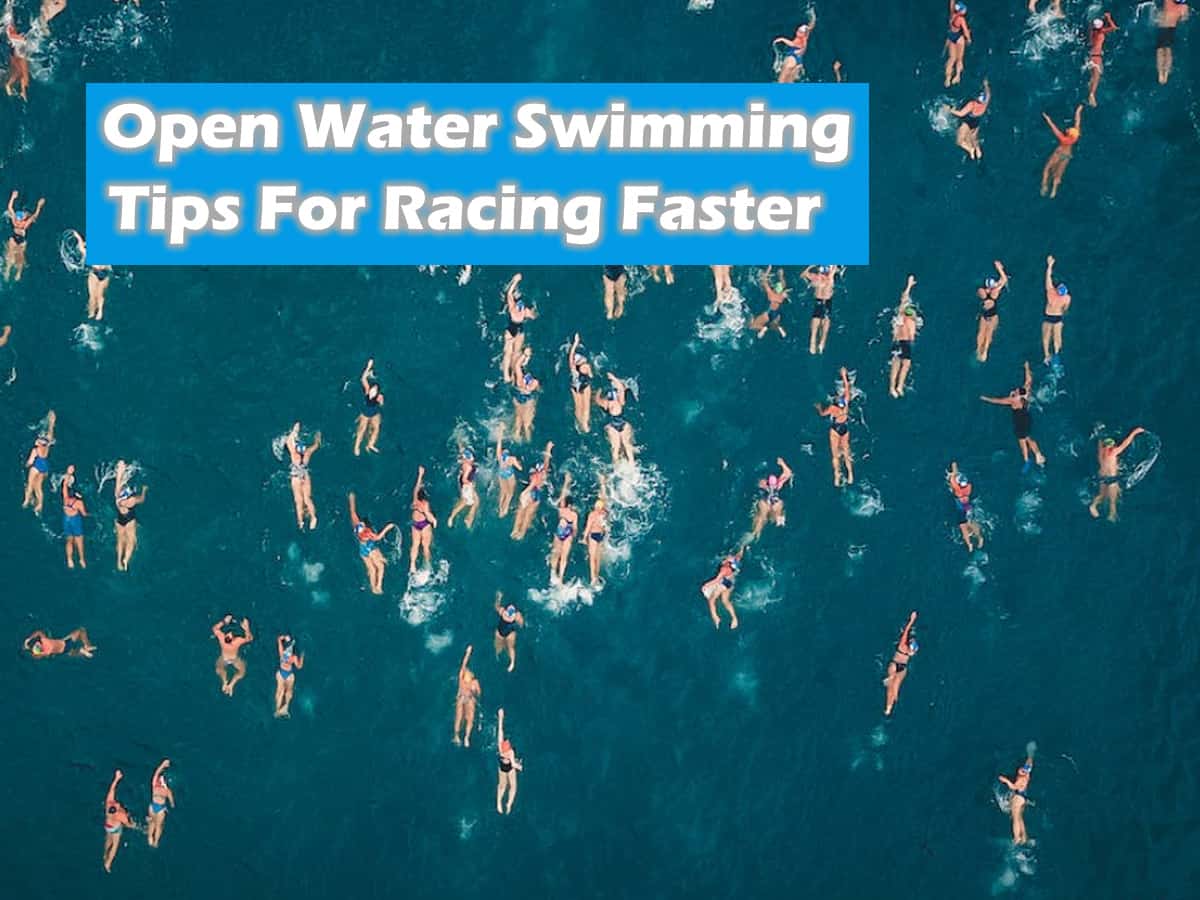
Participating in an open water triathlon or open water swimming competition can be both exciting and nerve-wracking. The swimming portion of the race presents its own set of challenges and requires specific preparation.
Training in open water requires certain gear that you won’t need when pool swimming. There are dangers of swimming in open water. Pick your swimming locations carefully and be sure you’re properly outfitted if this is the first time you’re swimming outside.
I’ve found many open-water swimming tips that have helped me race faster in most open-water venues. I want to share them with you so you can swim like Lucy Charles-Barclay.
Start Slow and Find Your Rhythm

The one-word description I use for most open-water starts is “chaos”. Some people refer to it as being in a washing machine. You are going to be hit, poked, grabbed, and kicked by all the other nervous athletes. You’ll also simultaneously be trying to breathe and the waves will be splashing water over your face. Sounds fun, right?
Everybody is nervous and excited before the swim portion of a big race, especially first timers. Some people are terrified. They might hyperventilate and resort to doggie paddling in their panic. Some just stop and begin treading water. I’ve seen it plenty of times.
The unfamiliarity of not having a black line to follow or lane lines separating swimmers may be a trigger for some people. Their fear may actually put them in a dangerous situation. They might have spent all their time pool swimming and showed up unprepared for this event. You should be aware that other swimmers may not be as calm as you.
The key to performing well is to start slow and find your rhythm. Force yourself to swim slower than you anticipated. Let people pass you but keep your rhythm slow and methodical. Just find your rhythm and settle into a sustainable stroke after a few minutes.
Your body may also need to adjust to the environment. Cold water is difficult for everyone. Just take it slow and conserve your energy. After about five minutes of swimming, you’ll be in a good rhythm and you can increase your pace if necessary. Related – Pace chart for running.
Starting slow will help conserve energy while keeping your heart rate down. Starting too fast can lead to exhaustion and compromise your overall performance.
Benefit: lower heart rate, energy conservation
Master Bilateral Breathing
Bilateral breathing, where you are able to breathe on either side of your body, will help you immensely in open water swimming. You need to practice this extensively while pool swimming before trying it in open water.
You should learn to breathe bilaterally for three main reasons: waves, sunlight, and sighting.
Fewer Waves In Your Face

Waves can create moments of limited visibility, especially when they crash or break near the surface. Bilateral breathing allows you to alternate your breathing side, giving you a better chance to time your breaths between waves.
If the waves are coming from the left, you can breathe to the right and avoid being smacked directly in the face and missing a breath. You’ll minimize the chances of inhaling water or being caught off guard.
Waves can be intimidating, especially for inexperienced open-water swimmers. Bilateral breathing helps build confidence and mental resilience in the face of waves. A calm swimmer is a fast swimmer.
Avoid Sunlight In Your Eyes

Bilateral breathing can be beneficial when facing the challenge of the sun in your eyes during open-water swimming. Glare from the sun can affect your visibility and disrupt your swimming rhythm.
Keep the sun out of your eyes by breathing to the side that is away from the glare. If the swim course is an out-and-back loop, the